TL;DR
A funeral planning checklist works best in three phases: the first 24 hours (pronouncement, family, funeral home), the first week (burial or cremation, service, obituary, death certificates) and the first month (Social Security, banks, probate, taxes). Order 8 to 12 certified death certificates. The service is usually arranged within 3 to 7 days, while paperwork continues for months.
The complete funeral planning checklist: 25 tasks to handle in the first week, first month, and beyond — in the right order — when you've lost a loved one.
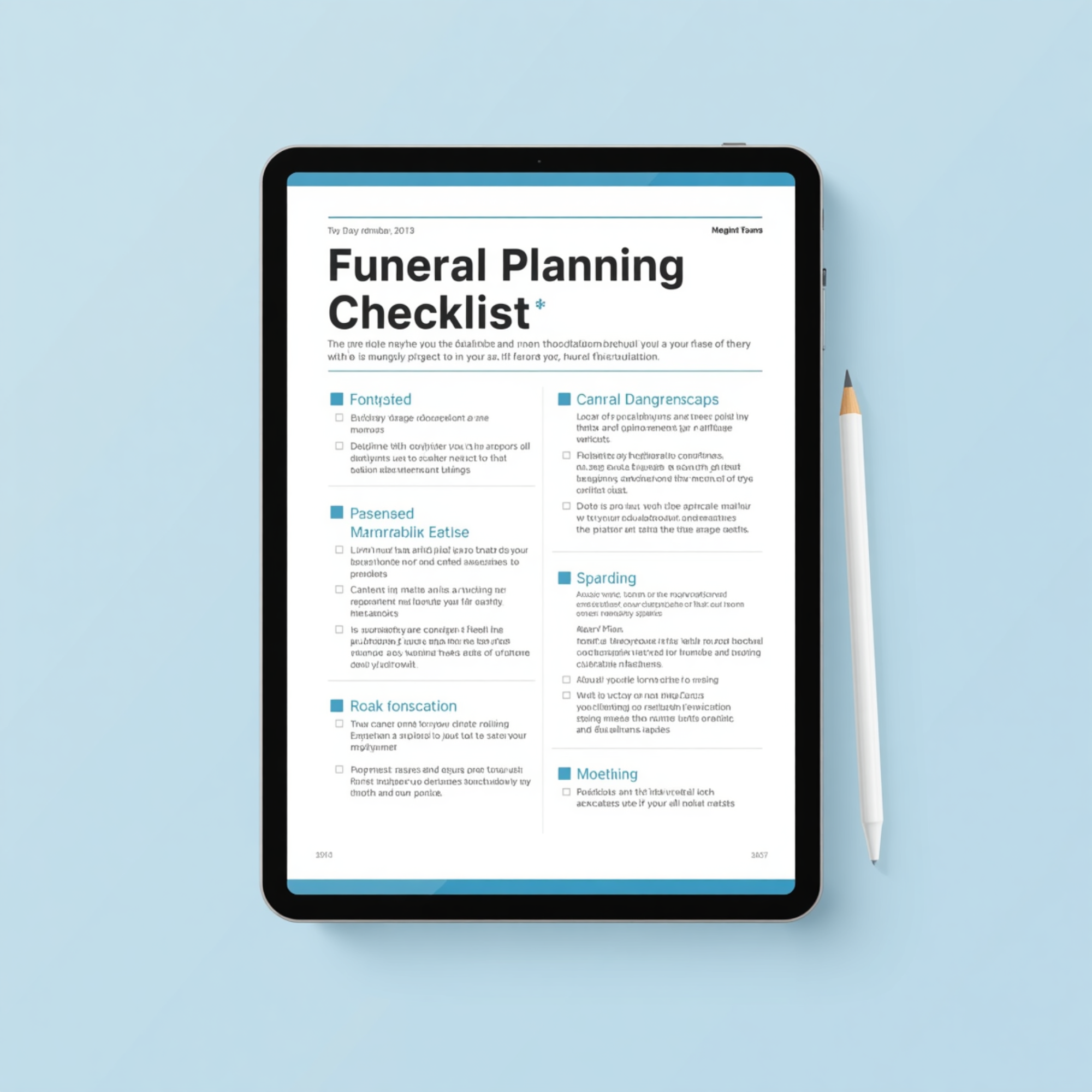
When a loved one dies, the sheer volume of tasks can feel paralyzing. This funeral planning checklist organizes the 25 most important steps into three clear phases: the first 24 hours, the first week, and the first month. Use it as a guide so nothing critical falls through the cracks.
Phase 1: The First 24 Hours
See our dedicated first 24 hours guide for full detail. In summary:
- Get an official pronouncement of death
- Notify immediate family by phone
- Contact the hospice provider, 911, or attending physician as appropriate
- Call a funeral home or funeral concierge to arrange transportation of the deceased
- Begin locating key documents (will, insurance policies, ID, bank info)
Phase 2: The First Week
- Decide on disposition — cremation or burial. See cremation vs burial.
- Select a funeral home and request a General Price List from 2–3 providers
- Plan the service type — traditional funeral, memorial, celebration of life, graveside
- Choose casket, urn, headstone, and any merchandise
- Set the date, time, and location of the service
- Write and publish the obituary (see how to write an obituary)
- Contact clergy or officiant
- Notify the deceased's employer, clients, or key contacts
- Arrange flowers, music, catering
- Order death certificates — get 8–12 certified copies
- File any life insurance or funeral insurance claims
Phase 3: The First Month
- Notify Social Security and apply for the $255 lump-sum death benefit
- Contact the VA if the deceased was a veteran (see veterans burial benefits)
- Notify Medicare and Medicaid
- Cancel credit cards, utilities, and subscriptions in the deceased's name
- Notify banks and close or retitle accounts
- Contact the executor and file the will with probate court if needed
- Meet with an estate attorney or CPA
- File the final income tax return
- Send thank-you notes to those who helped or sent condolences
Documents You'll Need
- Certified death certificates (8–12 copies)
- Will and trust documents
- Life insurance and funeral insurance policies (see what is funeral insurance)
- Social Security card or number
- Military discharge papers (DD-214) if veteran
- Bank account and investment statements
- Property deeds and vehicle titles
- Marriage and birth certificates
Costs to Budget For
- Funeral service and merchandise: $6,000–$15,000 — see funeral cost breakdown
- Cremation alternative: $1,500–$5,000 — see direct cremation cost
- Cemetery plot, opening/closing, marker: $2,000–$7,000
- Death certificates: $150
- Obituary: $100–$1,000+
- Catering, flowers, travel: variable
If funding is tight, see how to pay for a funeral with no money.
Frequently Asked Questions
How long does funeral planning take?
The service itself is typically arranged within 3–7 days. Administrative tasks (estate, insurance, government notifications) continue for 1–6 months.
Who can plan a funeral?
Typically the next of kin or executor named in the will. Some families designate a specific family member in advance.
Can I do this myself without a funeral home?
Home funerals are legal in most states. Rules vary. Most families still use a funeral home for transportation and paperwork.
What if the deceased pre-planned?
Follow their documented wishes and pre-paid plan. See how to pre-plan a funeral.
Titan Concierge Can Handle All of This
At Titan Concierge, we guide families through every step of this checklist — including negotiating with funeral homes, filing insurance claims, and handling logistics. Explore the Titan 360 funeral insurance plan.
Related Articles